



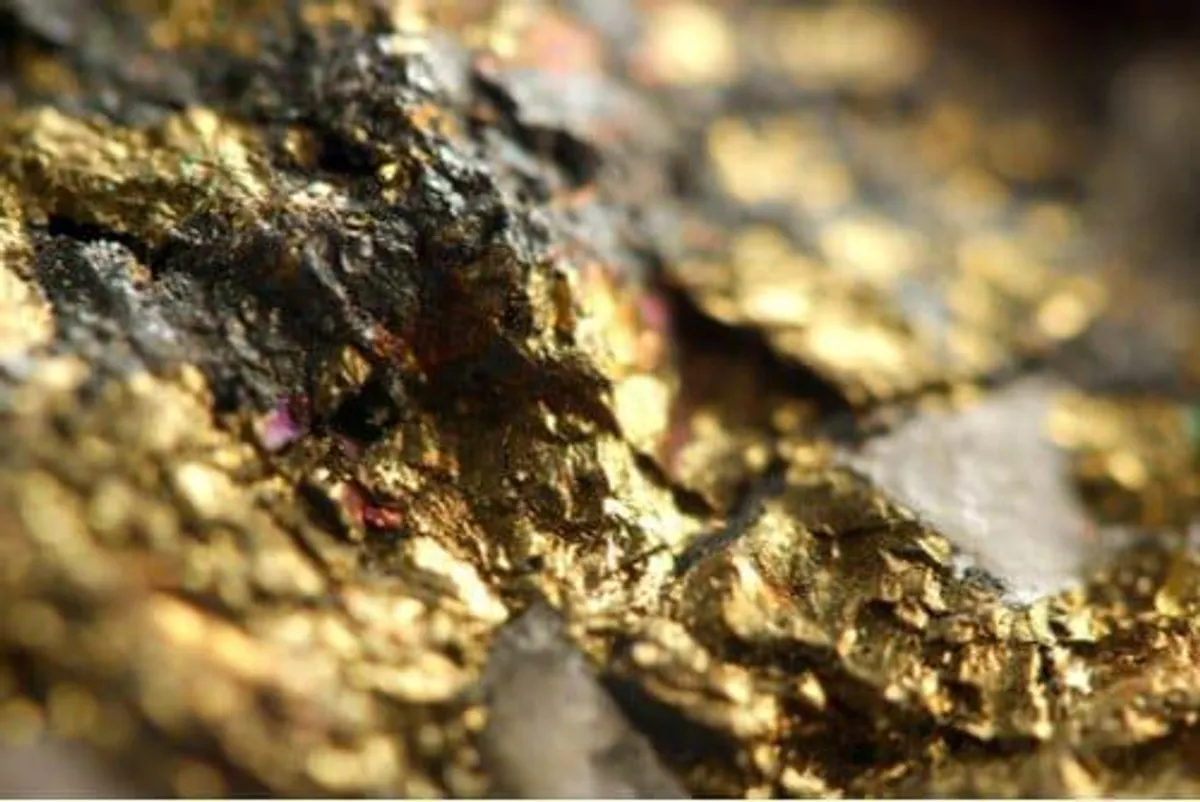
Description
Buy Unrefined Gold Ore from Cameroon – Gold Ore Assay, Grade & Buyer Guide
Buying unrefined gold ore from Cameroon requires a different evaluation process from buying gold bars, doré, dust, or nuggets. Gold ore is a mineral-bearing material that may contain gold together with rock, quartz, sulfides, clay, oxides, and other minerals.
For international buyers, the key questions are not simply “How much does one tonne cost?” or “What is the purity?” The important questions are:
- What is the verified gold grade?
- How was the sample collected?
- Which laboratory performed the assay?
- How representative is the sample?
- What is the expected recovery rate?
- What processing method is appropriate?
- What is the declared origin?
- Is the supply chain documented?
- What export and import requirements apply?
This guide explains how qualified buyers, processors, refineries, and mining companies can evaluate Cameroon-origin gold ore more professionally.
What Is Unrefined Gold Ore?
Gold ore is naturally occurring rock or mineralized material containing gold at a concentration that may be economically recoverable through appropriate processing.
Unlike refined gold, gold ore is not a standardized precious-metal product. Two tonnes of ore from different deposits can have completely different gold grades, mineralogy, recovery rates, and economic value.
Gold may occur in ore as:
- Free-milling gold
- Fine disseminated gold
- Gold associated with quartz
- Gold associated with sulfide minerals
- Gold contained within other mineral structures
- Gold occurring alongside silver or other economically valuable minerals
Consequently, a professional buyer should evaluate the geological and metallurgical characteristics of the ore, not simply its physical appearance.
Gold Ore Specifications
| Specification | What Buyers Should Verify |
|---|---|
| Product | Unrefined gold-bearing ore |
| Origin | Cameroon, supported by appropriate documentation |
| Physical form | Rock, crushed ore, gravel or other mineralized material |
| Gold grade | Determined by representative assay |
| Common assay units | g/t Au or other laboratory-reported units |
| Mineralogy | Determined where necessary for processing |
| Recovery | Established through appropriate metallurgical testing |
| Moisture | Important for bulk commercial shipments |
| Weight | Verified by appropriate weighing procedures |
| Processing | Depends on ore characteristics |
| Documentation | Origin, assay, transaction and regulatory documentation |
| Export | Subject to applicable Cameroon regulations |
| Pricing | Based on grade, recovery, contained gold, processing economics and commercial terms |
Gold Ore Grade Is Not the Same as Gold Purity
One of the most important distinctions for buyers is the difference between ore grade and gold purity.
A refined gold bar may be described using fineness such as 999.9.
Gold ore is different.
Ore is generally evaluated according to the concentration of gold contained in the material, commonly reported as grams of gold per tonne of ore.
For example:
Gold grade: 5 g/t Au
means that one metric tonne of ore contains an estimated five grams of gold before accounting for processing recovery.
It does not mean that the ore is 5% gold.
This distinction is critical when comparing supplier offers.
A claim that ordinary gold ore has “15%–92% gold purity” should therefore not be accepted without exceptional analytical evidence. Such a concentration would represent a fundamentally different material from ordinary low- or medium-grade mineralized ore.
How Gold Ore Is Valued
The commercial value of gold ore depends on more than its assay grade.
A simplified evaluation can begin with:
Contained gold = ore weight × gold grade
For example:
1 tonne × 5 g/t Au = 5 grams of contained gold
However, a processing operation will not necessarily recover 100% of that gold.
If metallurgical testing indicates an 85% recovery:
5 g × 85% = 4.25 g recovered gold
The economic assessment must then consider:
- Gold market price
- Ore grade
- Metallurgical recovery
- Processing method
- Processing cost
- Transport cost
- Moisture
- Sampling and assay costs
- Taxes and duties
- Refining charges where applicable
- Waste and handling costs
- Required infrastructure
- Commercial settlement terms
This is why a fixed online price such as $500–$1,500 per tonne is not an appropriate universal valuation for gold ore.
Why an Independent Assay Matters
The most important document in a commercial gold-ore transaction is often the representative assay.
A laboratory result is only useful if the sample represents the material being sold.
Buyers should ask:
- How was the sample collected?
- Who collected it?
- Was the sample split?
- Was it prepared by an independent laboratory?
- What analytical method was used?
- What was the assay result?
- How does the sample relate to the full shipment?
- Was moisture considered?
- Are duplicate or check assays available?
For a large transaction, buyers may consider independent sampling and laboratory analysis before final settlement.
Representative Sampling Is Critical
Gold can be unevenly distributed within mineralized material.
A small sample taken from a visibly rich section of ore may produce an assay that does not represent an entire shipment.
This is known as sampling bias or poor sample representativity.
A professional bulk transaction should therefore establish a sampling protocol before the commercial settlement is finalized.
Depending on the material and transaction, this can involve:
- Bulk sampling
- Systematic sampling
- Sample splitting
- Duplicate samples
- Independent laboratory testing
- Check assays
- Moisture determination
- Chain-of-custody records
The objective is to make sure that the laboratory result reflects the material being purchased rather than an unusually rich or poor portion of it.
Gold Ore vs. Gold Dust vs. Gold Doré
These products should not be treated as interchangeable.
Gold Ore
Gold-bearing rock or mineralized material requiring processing.
Gold Dust
Fine particles of mined gold, often associated with alluvial deposits, with substantially more concentrated gold content than ordinary ore.
Gold Nuggets
Naturally occurring pieces of native gold that can have both metal value and, in some cases, collector value.
Gold Doré
A semi-refined gold alloy produced after mining and processing that still requires further refining.
Refined Gold
Gold processed to a specified high fineness and generally supplied in standardized bullion form.
Understanding the difference is essential when evaluating online gold offers.
Gold Ore Processing
The appropriate processing method depends on the ore’s mineralogy and gold occurrence.
Possible processing routes can include:
- Crushing
- Grinding
- Gravity concentration
- Flotation
- Leaching
- Concentrate production
- Smelting
- Refining
Not every ore responds to the same process.
For example, free-milling gold may respond differently from gold locked inside sulfide minerals. A high laboratory grade does not automatically mean that the ore will generate a high commercial recovery.
For significant purchases, metallurgical testing can therefore be as important as the initial assay.
What Buyers Should Request Before Purchasing Gold Ore
A serious commercial buyer should request information sufficient to evaluate the material before committing to a large transaction.
Product Information
Request:
- Ore description
- Approximate quantity
- Physical condition
- Sampling information
- Moisture information where relevant
- Geological or production information where available
Assay Information
Request:
- Gold grade
- Assay units
- Laboratory name
- Analytical method
- Sample identification
- Assay date
- Certificate or laboratory report where available
Supply-Chain Information
Request appropriate information concerning:
- Seller identity
- Declared mine or production area
- Ownership or production rights where relevant
- Chain of custody
- Transaction history where appropriate
- Regulatory documentation
Commercial Information
Establish:
- Quantity
- Pricing methodology
- Assay basis
- Sampling procedure
- Payment terms
- Delivery responsibilities
- Processing arrangements
- Insurance
- Taxes and duties
Responsible Gold-Ore Sourcing
Responsible sourcing is increasingly important for professional mineral buyers.
The OECD states that responsible-mineral due diligence applies across the mineral supply chain, from mines to end users, and addresses risks including human rights abuses, conflict financing, corruption, financial crime and environmental impacts.
For gold ore transactions, responsible due diligence can include:
- Identifying the producer and counterparties
- Understanding the production location
- Reviewing supply-chain risks
- Maintaining transaction records
- Verifying documentation
- Assessing environmental and social risks
- Conducting enhanced due diligence where red flags exist
The OECD’s gold-specific guidance also recommends additional investigation when red flags or material information gaps are identified.
This makes traceability and documentation important parts of a modern gold procurement process.
Buying Gold Ore from Cameroon: Regulatory Considerations
International buyers should not assume that mineral material can be exported from Cameroon simply because a supplier offers it for sale online.
Cameroon’s Law No. 2023/014 of 19 December 2023 relating to the Mining Code provides that mineral substances extracted from Cameroon’s subsoil and destined for export must undergo expert valuation by an approved laboratory under the applicable regulations. The Code also provides specific rules concerning precious substances and states that gold produced in Cameroon shall be exported in refined form under the applicable regulatory conditions.
Therefore, a buyer considering Cameroon-origin gold ore should establish:
- Whether the specific material can legally be exported
- Which authority or procedure applies
- Whether valuation is required
- Whether refining is required before export
- Which documents must accompany the transaction
- What requirements apply in the destination country
The regulatory pathway should be confirmed before payment, shipment or contractual commitment.
Why Buyers Should Be Careful With “Gold Ore for Sale” Offers
Online gold-ore advertisements can contain incomplete or unrealistic information.
Be cautious when a seller:
- Claims extremely high ore purity without credible assay evidence
- Offers a fixed price without identifying the grade
- Refuses independent testing
- Cannot explain the mine or production source
- Requests payment to an unrelated personal account
- Provides unverifiable certificates
- Promises guaranteed customs clearance
- Claims worldwide shipping without explaining import requirements
- Pressures the buyer to make an immediate payment
- Avoids written commercial terms
A professional supplier should be willing to discuss assay, sampling, documentation, regulatory requirements and transaction terms.
Gold Ore Pricing: What a Buyer Should Compare
Instead of asking only:
“What is the price per tonne?”
a buyer should ask:
“What is the verified gold grade, expected recovery, contained gold and total delivered processing economics?”
For example, two suppliers may offer:
Supplier A: 5 g/t Au
Supplier B: 10 g/t Au
Supplier B is not automatically twice as profitable.
The buyer must also consider:
- Recovery
- Processing cost
- Transport distance
- Ore mineralogy
- Moisture
- Refining costs
- Taxes
- Shipment size
- Required infrastructure
A lower-grade ore close to a suitable processing facility can sometimes have different economics from higher-grade ore with substantially greater transport and processing requirements.
Gold Ore for Refineries and Processors
Gold ore is generally more relevant to mineral processors, concentrators, smelters, mining companies and specialized processing operations than to buyers looking for immediately tradable bullion.
Before purchasing a large quantity, the receiving facility should confirm:
- Accepted ore type
- Maximum particle size
- Moisture limits
- Gold-grade range
- Mineralogical characteristics
- Required documentation
- Sampling protocol
- Processing capability
- Settlement terms
The buyer should not purchase material without first confirming that the intended processing facility can actually handle it.
Gold Ore Buying Process
A transparent commercial process can follow these stages:
1. Buyer Inquiry
Provide the required quantity, destination and intended processing route.
2. Counterparty Verification
Exchange appropriate company and KYC information.
3. Ore Information
Review the material description, declared origin, quantity and available assay information.
4. Sampling and Assay
Establish a mutually acceptable sampling and laboratory-testing procedure.
5. Metallurgical Review
Where commercially appropriate, evaluate expected recovery and processing requirements.
6. Regulatory Review
Confirm the applicable Cameroon export requirements and destination-country import requirements.
7. Commercial Agreement
Agree on grade, assay basis, price methodology, payment, delivery, documentation and responsibilities.
8. Compliance and Shipment
Complete the applicable regulatory, customs and transportation requirements.
9. Receiving and Settlement
The receiving processor or approved facility verifies the shipment and completes settlement according to the agreed terms.
For more information about the transaction process, see our Gold Order Process from Cameroon.
Related Gold Buyer Resources
Buyers researching Cameroon and African gold can also explore:
- Buy Gold Ore in Africa Safely
- Best Suppliers to Buy Gold Ore in Africa
- Buy Unrefined Gold Ore from Africa
- Buy Gold Dust from Cameroon
- Buy Gold Nuggets from Cameroon
- Buy Gold Doré Bars
- Buy Refined Gold Bars from Cameroon
- How to Legally Import Gold from Africa
- Buy Gold Directly from Africa
- How to Import Gold from Africa to Dubai
Frequently Asked Questions
What is unrefined gold ore?
Unrefined gold ore is rock or mineralized material containing gold that has not been processed into refined bullion. It may contain quartz, sulfides, clay, other minerals and varying concentrations of gold.
What is the purity of gold ore?
Gold ore does not normally have a standardized “purity” in the same sense as a gold bar. Buyers generally evaluate the gold grade, commonly reported in grams per tonne (g/t Au), together with recovery and processing characteristics.
How is gold ore tested?
A representative sample is prepared and analyzed by an appropriate laboratory using a suitable assay method. For significant transactions, independent or check assays can help reduce disputes.
How is gold ore priced?
Pricing depends on the verified gold grade, expected recovery, current gold price, processing costs, transportation, refining or treatment charges, taxes, and commercial terms.
Can gold ore from Cameroon be exported?
The applicable rules must be established for the specific material and transaction. Cameroon’s Mining Code contains specific requirements for mineral substances destined for export and states that gold produced in Cameroon is to be exported in refined form under applicable regulations.
Is gold ore the same as gold dust?
No. Gold ore is mineralized rock or material requiring processing. Gold dust is a more concentrated physical form of mined gold, often associated with alluvial deposits.
Should I buy gold ore based only on an assay?
No. Assay is important but is only one part of the evaluation. Buyers should also consider sampling quality, mineralogy, recovery, processing costs, origin, documentation and applicable regulations.
What documents should a gold-ore buyer request?
Depending on the transaction, buyers may need company/KYC documentation, assay reports, origin information, transaction records, applicable mining or export documentation, customs paperwork and receiving-facility requirements.
A Professional Approach to Buying Gold Ore from Cameroon
The most important principle when buying unrefined gold ore is verification before valuation.
A credible commercial evaluation should connect:
Ore → Representative Sample → Assay → Grade → Recovery → Processing Economics → Documentation → Regulatory Compliance
This approach is more useful than relying on generic claims about purity, fixed prices or guaranteed international delivery.
For qualified buyers evaluating Cameroon-origin gold-bearing material, BONAS Gold can provide transaction-specific information subject to availability, assay, documentation, verification and applicable regulatory requirements.
For a Commercial Inquiry
Provide:
- Required quantity
- Destination country
- Intended processing facility
- Required assay standard
- Target gold grade
- Preferred delivery terms
- Company information for due diligence


Reviews
There are no reviews yet.