



Description
Buy Gold Doré Bars from Africa – Gold Doré for Refineries & Qualified Buyers
Buy Gold Doré Bars from Africa with Verified Documentation
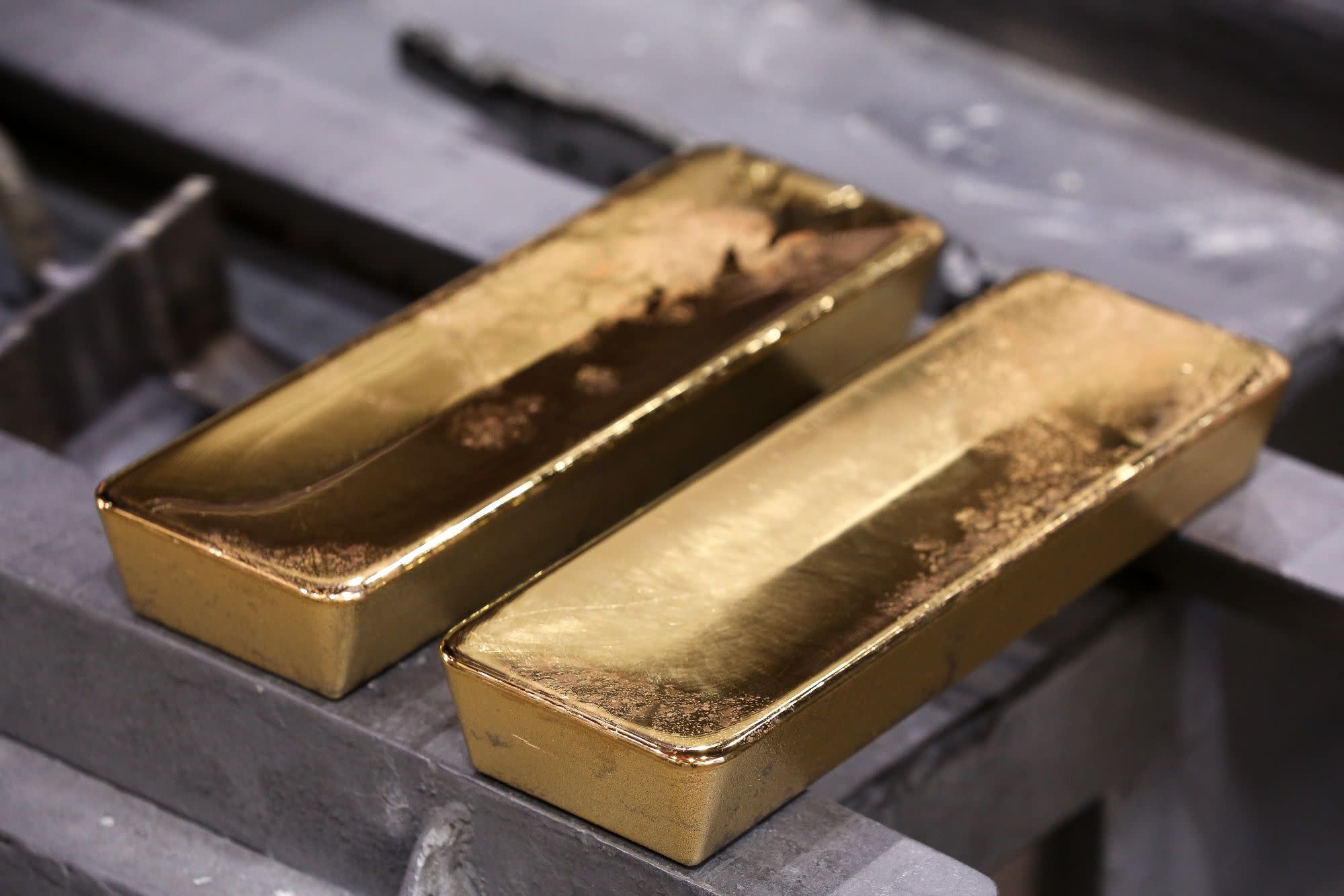
Gold doré bars are semi-refined gold alloys produced after mined gold-bearing material has been processed and smelted. Unlike finished investment bullion, doré still contains gold together with silver and other metals and is normally sent to a refinery for further processing.
For refineries, bullion businesses, precious-metals traders, and qualified commercial buyers, purchasing gold doré is therefore not simply a matter of finding a bar with a stated gold percentage. A professional transaction requires attention to assay results, fine-gold content, weight, origin, chain of custody, legal documentation, responsible sourcing, refining arrangements, and export requirements.
BONAS Gold provides information and transaction support for buyers interested in African gold supply, with product specifications and documentation confirmed according to the specific material and transaction.
What Is a Gold Doré Bar?
Gold doré is a semi-refined alloy of newly mined gold produced after ore or other gold-bearing material has undergone processing and smelting.
The resulting bar contains a high concentration of precious metals but is not normally equivalent to a finished 24K investment-gold bar.
According to the London Bullion Market Association (LBMA), gold doré generally has a gold purity of approximately 85%–90%, although the actual assay can vary substantially between sources and individual bars. Doré is subsequently transported to a refinery for direct refining.
A typical doré bar may contain:
- Gold
- Silver
- Copper
- Other naturally occurring or process-related elements
The exact composition must be established by an appropriate assay rather than assumed from a standard product description.
Gold Doré Bar Specifications
Gold doré is not a standardized retail bullion product. Specifications can differ according to the mine, deposit, processing method, production batch, refinery requirements, and assay.
| Specification | Product Information |
|---|---|
| Product | Gold Doré Bar |
| Material | Newly mined gold alloy |
| Gold Content | Confirmed by assay for the specific bar or lot |
| Other Metals | May include silver and other residual elements |
| Weight | Transaction-specific |
| Form | Smelted/cast bar |
| Assay | Independent or recognized assay documentation where applicable |
| Origin | Confirmed according to available supply-chain documentation |
| Refining | Requires further refining before production of high-purity bullion |
| Pricing | Based on fine-gold content, market price, assay, refining terms and transaction costs |
| Availability | Subject to current supply and documentation |
Why the Assay Matters
The gross weight of a doré bar is not the same as its fine-gold weight.
For example, a hypothetical 1 kg doré bar assaying at 88% gold would contain approximately:
1,000 g × 88% = 880 g fine gold
The actual commercial value would then depend on the applicable gold price, refining terms, payable metal, treatment charges, logistics, taxes and other agreed costs.
This is why professional buyers should evaluate fine-gold content, not simply the gross weight of a bar.
Gold Doré vs Refined Gold Bars
Understanding the difference between doré and refined bullion is essential.
| Feature | Gold Doré | Refined Gold Bar |
|---|---|---|
| Refining stage | Semi-refined | Fully refined |
| Typical purity | Variable | Commonly 99.5%+ depending on product |
| Gold content | Confirmed by assay | Usually stated on the bar/documentation |
| Silver and other metals | May be significant | Reduced through refining |
| Primary buyers | Refineries and qualified commercial buyers | Investors, dealers, institutions and collectors |
| Further refining | Required | Normally not required for bullion use |
| Pricing basis | Fine-gold content less applicable costs | Fine-metal content plus applicable premium |
A doré bar should therefore not be marketed as equivalent to a 24K 999.9 gold bar unless it has actually undergone the required refining and has documentation supporting that specification.
Why Refineries Buy Gold Doré
Gold refineries can process doré into higher-purity gold products.
Depending on the refinery’s capabilities and the composition of the feed material, the refining process may separate:
- Gold
- Silver
- Platinum-group elements where present
- Other metals and impurities
For commercial buyers, the important issue is not simply the headline gold percentage but whether the material is economically suitable for the intended refinery.
A refinery may therefore evaluate:
- Assay
- Gross weight
- Fine-gold content
- Silver content
- Other payable metals
- Impurities
- Refining charges
- Transport and insurance
- Settlement terms
- Supply-chain documentation
LBMA notes that independent assayers play an important role in determining accurate analyses and supporting settlement between counterparties in the precious-metals industry.
How Gold Doré Is Priced
There is no responsible universal price list for gold doré.
The value of an individual bar or lot depends on several variables.
1. Gold Market Price
International gold prices provide the underlying reference for the contained metal.
2. Assayed Gold Content
The assay determines the percentage of gold in the material.
3. Fine-Gold Weight
Fine-gold weight can be calculated broadly as:
Gross weight × gold fineness = contained fine gold
4. Payable Metal
The final settlement may depend on the refiner’s agreed payable percentage and commercial terms.
5. Silver and Other Recoverable Metals
Some doré contains substantial silver or other recoverable metals that may influence the settlement value.
6. Refining Charges
The buyer or refinery may incur treatment, refining, assay and other processing costs.
7. Logistics
Insurance, transportation, secure handling, customs processing and related expenses can affect the final transaction economics.
For these reasons, publishing a fixed “$40,000–$500,000 per bar” price table is misleading without knowing the exact weight, assay, market price and transaction terms.
A professional gold buyer should request a quotation based on the actual bar or lot.
Gold Doré Assay and Verification
One of the most important stages in a doré transaction is verifying the metal content.
Depending on the transaction, documentation may include:
- Assay certificate
- Weight certificate
- Bar identification
- Commercial invoice
- Packing documentation
- Origin information
- Mining or production documentation
- Export documentation
- Refinery instructions
- Chain-of-custody records
For larger transactions, independent sampling and assay can provide additional protection for both buyer and seller.
LBMA describes assay as a critical part of precious-metal settlement and notes the role of independent assayers in providing reliable analysis between counterparties.
Why Gold Traceability Matters
A legitimate gold transaction requires more than proving that a bar contains gold.
Buyers should also consider:
Where was the gold produced?
Who produced or collected it?
Who handled it before export?
What documentation supports its origin?
Does the transaction comply with applicable regulations?
Can the supply chain be reasonably verified?
These questions are increasingly important in international gold trading.
The OECD Due Diligence Guidance applies across mineral supply chains from mines to end users and recommends processes for identifying and addressing risks involving human rights, conflict, corruption and financial crime.
Responsible Gold Sourcing
Responsible sourcing should be treated as a process rather than a marketing label.
For international gold transactions, buyers should conduct appropriate due diligence concerning:
- Supplier identity
- Mine or production source
- Ownership and licensing
- Origin documentation
- Transportation
- Export authorization
- Assay information
- Payment arrangements
- Sanctions and financial-crime risks
- Human-rights and environmental risks
- Chain of custody
The OECD recommends risk-based due diligence for companies operating across mineral supply chains, including gold.
Buying Gold Doré from Cameroon
Cameroon has an evolving formal mining and mineral-trading framework, and buyers should pay particular attention to the legal status of the material being purchased.
Cameroon’s 2023 Mining Code contains specific provisions concerning the production, processing and marketing of mineral substances. It also states that mineral substances extracted from Cameroon and destined for export are subject to expert valuation under the applicable regulations, and that gold produced in Cameroon is to be exported in refined form under the terms and conditions established by regulation.
This means an international buyer should not assume that a Cameroon-origin gold doré bar can simply be shipped overseas as an ordinary commercial parcel.
The applicable export pathway should be established for the particular transaction and product.
This distinction is important for buyers searching online for:
- Gold doré from Cameroon
- Cameroon gold suppliers
- Buy gold from Cameroon
- African gold exporters
- Gold for refineries
- Gold bullion from Africa
A credible supplier should be able to explain what documentation applies to the proposed transaction.
Buying Gold Doré from Africa
Africa contains diverse gold-producing regions and supply chains. However, buyers should avoid treating the entire continent as one uniform gold market.
A professional sourcing process should establish the specific country, production source, supplier, assay, legal status and export route for each transaction.
BONAS Gold can work with buyers seeking African gold products subject to available supply, applicable documentation and transaction requirements.
Rather than making blanket claims about all African gold, we recommend evaluating each parcel individually.
Who Buys Gold Doré?
Gold Refineries
Refineries purchase doré as feedstock for producing higher-purity gold.
Precious-Metal Traders
Professional traders may purchase doré where they have appropriate refining and settlement arrangements.
Bullion Businesses
Businesses involved in precious metals may use refined output derived from doré as part of their bullion supply chain.
Jewelry Manufacturers
Jewelry manufacturers generally require refined gold rather than untreated doré, although doré can form part of an upstream supply chain.
Institutional and Commercial Buyers
Large buyers may evaluate doré according to documented origin, assay, compliance, logistics and refinery acceptance criteria.
What Buyers Should Request Before Purchasing Gold Doré
Before making a significant payment, a buyer should request information appropriate to the transaction.
Product Information
- Gross weight
- Assay
- Estimated fine-gold content
- Silver and other payable metals where relevant
- Bar identification
- Photographs or inspection arrangements
Supplier Information
- Legal company identity
- Business registration information
- Relevant mining or trading authorization
- Physical business information
- Authorized representatives
Supply-Chain Documentation
- Origin documentation
- Production documentation
- Chain-of-custody information
- Applicable export documentation
- Commercial invoice
Transaction Information
- Pricing formula
- Payment terms
- Refining arrangements
- Delivery terms
- Insurance
- Customs responsibilities
- Independent assay arrangements
A Practical Gold Doré Buying Process
Step 1 – Submit a Buyer Inquiry
Specify the desired:
- Country of origin
- Quantity
- Approximate bar size
- Assay requirements
- Destination
- Refinery requirements
Step 2 – Review Supplier & Product Documentation
The buyer should review the available company and product documentation before proceeding.
Step 3 – Review the Assay
Confirm the stated gold content and determine the estimated fine-gold weight.
Step 4 – Complete Due Diligence
Verify the supplier, source, documentation and applicable regulatory requirements.
Step 5 – Independent Assay Where Appropriate
For significant transactions, independent sampling or assay can reduce disputes concerning metal content.
Step 6 – Confirm Export & Import Requirements
The exporter and buyer should establish which documents and approvals are required in both jurisdictions.
Step 7 – Agree Commercial Terms
The final agreement should clearly state:
- Product
- Quantity
- Assay basis
- Price formula
- Payment
- Refining
- Delivery
- Insurance
- Taxes and duties
- Dispute procedures
Step 8 – Shipment and Settlement
The shipment should follow the agreed legal and logistical process, with documentation retained by the relevant parties.
How to Avoid Gold Doré Scams
International gold trading attracts fraudulent offers, so buyers should be cautious when a seller:
- Promises gold substantially below market value
- Refuses independent assay
- Requests unexplained advance payments
- Provides unverifiable certificates
- Uses government logos without authorization
- Claims guaranteed returns
- Refuses to identify the actual supplier
- Cannot explain the legal export process
- Provides inconsistent company information
- Pressures the buyer to pay immediately
A professional transaction should withstand reasonable due diligence.
Do not rely solely on photographs, WhatsApp messages, certificates or websites when evaluating a high-value gold transaction.
Gold Doré vs Gold Ore vs Gold Dust
These products should not be confused.
| Product | Description | Typical Buyer |
|---|---|---|
| Gold Ore | Rock or mineralized material containing gold | Processing companies |
| Gold Concentrate | Processed material with higher gold concentration | Smelters/refineries |
| Gold Doré | Smelted gold alloy requiring further refining | Refineries |
| Gold Dust | Fine gold particles requiring verification and processing/refining as applicable | Gold traders/refiners |
| Refined Gold | High-purity gold after refining | Bullion buyers, investors and manufacturers |
LBMA distinguishes gold ore, concentrate and doré based on their position within the mining and refining process.
Related Gold Products & Buying Guides
Buyers researching African gold can also explore:
- Buy Gold Dust from Cameroon
- Buy Gold Nuggets from Cameroon
- Buy Unrefined Gold Ore from Cameroon
- Buy Refined Gold Bars from Cameroon
- Buy Gold Directly from Africa
- Gold Order Process from Cameroon
- How to Legally Import Gold from Africa
- Gold Mining in Cameroon
Frequently Asked Questions About Gold Doré Bars
What is a gold doré bar?
A gold doré bar is a semi-refined alloy produced from mined gold-bearing material. It contains gold together with silver and other metals and normally requires further refining.
What purity is gold doré?
There is no universal doré purity. LBMA describes gold doré as generally around 85%–90% gold, but the actual assay can vary by source and bar.
Is gold doré the same as 24K gold?
No. Doré requires further refining to produce high-purity bullion.
How is gold doré priced?
Pricing is generally based on the contained fine gold and other payable metals, adjusted for assay, refining charges, market conditions, logistics and agreed commercial terms.
Can gold doré be exported from Cameroon?
The applicable export rules depend on the specific product and transaction. Cameroon’s Mining Code states that gold produced in Cameroon is to be exported in refined form under applicable regulations. Buyers should therefore verify the lawful export pathway before entering a transaction.
Should buyers obtain an independent assay?
For significant transactions, independent assay or other appropriate verification can help establish the actual metal content and reduce settlement disputes.
Is gold doré suitable for investors?
Doré is primarily a semi-refined feedstock for professional refining rather than a conventional retail investment-bullion product. Buyers should understand the refining, assay, legal and logistical requirements before purchasing.
How can I verify African gold?
Verification should combine supplier due diligence, product documentation, assay information, origin and chain-of-custody evidence, and confirmation of applicable export and import requirements.
Request Gold Doré Information
If you are a refinery, bullion dealer, precious-metals trader or qualified commercial buyer looking to source gold from Africa, provide the following information when making an inquiry:
- Required quantity
- Preferred country of origin
- Target assay or purity
- Destination country
- Refinery requirements
- Required documentation
- Preferred delivery terms
BONAS Gold can then assess the appropriate product and documentation requirements for the proposed transaction.
Important Buyer Disclaimer
Gold doré specifications, availability, assay, origin, pricing, documentation and export requirements vary by transaction.
No fixed gold price, purity, origin, certification or export claim should be assumed without supporting documentation for the specific material.
International buyers should conduct independent commercial, legal, customs, sanctions, anti-money-laundering and supply-chain due diligence before completing a high-value precious-metals transaction.


Reviews
There are no reviews yet.