Major Players and Gold Mining Projects in Cameroon
Cameroon has significant gold potential and is undergoing an important transition from predominantly artisanal and semi-mechanized production toward a more structured industrial gold-mining sector.
The country’s gold industry includes artisanal and small-scale operators, mineral companies, exploration projects, gold-processing businesses, and emerging industrial mining operations. Government policy is increasingly focused on improving traceability, formalizing the sector, strengthening regulatory oversight, and developing large-scale mining projects.
According to the Ministry of Mines, Industry and Technological Development (MINMIDT), Cameroon entered industrial gold production with the Colomine Gold Project, while additional major gold projects are being developed, including Mborguéné, Bibemi, and Mbe.
Cameroon’s Growing Gold Mining Industry
Cameroon’s gold resources are distributed across several regions of the country, with important gold-producing and exploration areas in the East, Adamawa, North, and southern regions.
Historically, a significant portion of gold production has come from artisanal and small-scale mining. The government is now working to improve the organization and traceability of this sector while supporting the development of industrial mining.
MINMIDT has identified gold as one of the country’s major mining value chains alongside iron, bauxite, and limestone.
This changing environment is creating opportunities for mining companies, investors, processors, mineral traders, service providers, and international buyers.
Colomine Gold Project
The Colomine Gold Project is one of the most important developments in Cameroon’s transition toward industrial gold production.
The project is located in the East Region of Cameroon and is associated with the country’s move toward formal industrial gold mining.
MINMIDT states that Colomine became one of the country’s major mining projects and entered production as part of the expansion of Cameroon’s industrial mining sector.
The project is particularly significant because it demonstrates the transition from predominantly artisanal production toward organized industrial gold extraction.
Mborguéné Gold Project
The Mborguéné Gold Project is another major development in Cameroon’s gold sector.
MINMIDT identifies Mborguéné among the major gold projects entering the development and production phase. The project is associated with Caminco and international mining interests, including Shandong Gold.
The development of Mborguéné reflects the growing interest in Cameroon’s gold resources and the government’s efforts to establish a stronger industrial mining sector.
Bibemi Gold Project
The Bibemi Gold Project is another significant gold development being advanced in Cameroon.
MINMIDT lists Bibemi among the country’s major gold projects moving toward production as part of the expansion of industrial gold mining.
The project is important to the development of Cameroon’s northern gold-producing areas and contributes to the government’s broader objective of increasing formal mineral production.
Mbe Gold Project
The Mbe Gold Project is also identified by MINMIDT as part of the country’s emerging industrial gold-mining pipeline.
Government information published in 2026 identifies four major industrial gold projects:
- Colomine
- Mborguéné
- Bibemi
- Mbe
These projects form an important part of Cameroon’s strategy to develop its gold industry and increase formal industrial production.
Historical Gold Exploration Projects
Cameroon’s gold exploration history also includes projects that were promoted by international exploration companies during earlier stages of the country’s mining development.
For example, Legend Mining previously reported a significant Cameroon exploration portfolio through its interest in Camina SA. Its historical reporting described exploration interests covering gold and iron prospects in Cameroon.
Such historical exploration activity is useful for understanding the development of Cameroon’s mining industry, but buyers and investors should distinguish between historical exploration ownership, current exploration permits, and active mining operations.
Mining rights and project ownership can change over time.
For current information, buyers and investors should consult MINMIDT’s published mining-title information rather than relying solely on older company announcements or archived articles.
Artisanal and Small-Scale Gold Mining
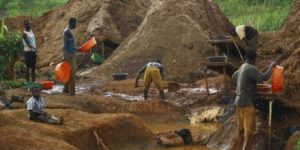
Alongside industrial projects, artisanal and semi-mechanized gold mining remains an important part of Cameroon’s gold sector.
Gold production has historically been associated with several regions, particularly in eastern and northern Cameroon.
The government is currently implementing measures intended to improve the organization, traceability, environmental management, and formalization of semi-mechanized artisanal gold mining.
MINMIDT has specifically highlighted reforms aimed at strengthening traceability and improving the structure of the artisanal gold sector.
For international buyers, this makes supplier verification, mineral origin, documentation, assay, and export compliance increasingly important.
The Role of Government in Cameroon’s Gold Sector
MINMIDT plays a central role in Cameroon’s mining administration.
Current government information emphasizes the involvement of different public administrations in the gold supply chain and the importance of traceability of both physical and financial flows.
MINMIDT also publishes information concerning:
- Mining titles
- Gold mining projects
- Gold export procedures
- Gold-sector reforms
- Mining-sector regulations
- Production information
- Measures concerning artisanal and semi-mechanized mining
For buyers and investors researching Cameroon, the official ministry website should be considered an important source of current regulatory and project information.
Cameroon Ministry of Mines, Industry and Technological Development – MINMIDT
A Changing Gold Mining Landscape
Cameroon’s gold sector is moving through an important period of development.
The combination of industrial mining projects, formalization of artisanal operations, improved traceability, regulatory reforms, and increased private-sector participation is creating a more structured mining environment.
The government’s 2026 gold-sector information identifies four major industrial gold projects—Colomine, Mborguéné, Bibemi, and Mbe—as part of the country’s emerging industrial gold value chain.
This development could increase the importance of Cameroon within the regional gold market while creating opportunities across mining, processing, logistics, refining, equipment supply, and mineral trading.
What This Means for Gold Buyers
For international buyers, the development of Cameroon’s industrial gold sector reinforces the importance of working with properly documented suppliers.
Before entering into a transaction, buyers should establish:
- The legal identity of the supplier
- The supplier’s role in the mineral supply chain
- The origin of the gold
- Product weight and purity
- Assay or testing information
- Applicable mining or trading documentation
- Export requirements
- Customs documentation
- Payment and delivery terms
Buyers should also verify current requirements with the relevant Cameroonian authorities because regulations, permits, mining titles, and export procedures can change.
BONASGOLD and Cameroon’s Gold Industry
BONASGOLD operates within Cameroon’s broader gold and mineral sector, providing information and commercial services relating to gold and other mineral products.
Our product categories include:
- Gold Doré Bars
- Gold Dust
- Gold Nuggets
- Unrefined Gold Ore
- Refined Gold Bars
- Silver Bars
- Rough Diamonds
- Rubies
- Olivine and Peridot Gemstones
We encourage international buyers to evaluate mineral transactions based on product quality, documentation, origin, applicable regulations, testing, logistics, and responsible sourcing, rather than price alone.
Looking Ahead
Cameroon’s gold industry is entering a new phase.
The development of industrial projects such as Colomine, Mborguéné, Bibemi, and Mbe, combined with government efforts to improve the formalization and traceability of artisanal gold production, is reshaping the country’s gold-mining landscape.
For mining companies, investors, suppliers, and international buyers, this evolving environment creates opportunities—but also makes proper due diligence increasingly important.
The most reliable information about current mining titles, projects, regulations, and gold-sector procedures should be obtained from the competent authorities and verified against the specific transaction or project being considered.
For current official mining information, visit MINMIDT.
For information about BONASGOLD’s gold and mineral products, visit our Products page or contact our team.